Showing posts with label commodity. Show all posts

Friday, June 3, 2011

Coffee, cafe, Caffea arabica

Caffea is a genus consisting of over 90 species, 2 most common species are Caffea arabica and Caffea  canephora ( syn. Caffea robusta ). Coffee trees are natives of Ethiopia, where coffee beans were used since about 800 AD. Coffee as a drink started out in 15th century. In Europe, some of the first  coffee drinkers were  hardcore criminals since  the penalty for drinking coffee was death ( in Austria, during it's war with Turkey sometime in 16th century).
There are countless researches about health effects of coffee, both positive and negative. According to some legend, one of the medieval kings cancelled death penalty for some twins and made them drink  coffee and tea 3 times a day in their cells. They outlived the king and died sometime in their 70s, which was a very advanced age  for their time.
In 2009, 83 countries cultivated coffee and  8 342 736 tonnes of coffee  (green beans )were produced, a largest crop of coffee beans ever. That is 1 kg and 255 grams of green beans per capita.Roasting coffee makes it 10 to 25% lighter,  so it should be about 1 kg  or 2.2 pounds of roasted coffee per potential consumer per year.  So there is a cup of coffee for everybody out there, for every day of the year.Over the last 50 years , coffee bean production almost doubled, however  land usage did not increase significantly.  Still, over 6.35% of all permanent crop land in the world is used for coffee production, almost 10 million hectares. For Brazil, this number is 26.6%.
Biggest coffee producer is Brazil  with 2 440 060 tonnes as of 2009, biggest producer per capita is Colombia with  20.17 kg of coffee beans produced per capita. That is almost 47 grams of roasted coffee beans per day. Imagine that, a Colombian must  drink almost 7 cups of expresso per day to keep his national treasure at bay..

Average yield  of coffee beans was 847.7 kg per hectare in 2009, that is also the  highest yield ever ; lowest yield (since 1961) was in 1964, 384 kg per hectare. Individual record belongs to Tonga (1997)-- 3200 kg per hectare.
Prices , coffee robusta  ( with Vietnam as a largest producer/exporter) is about $2000-2100 per ton (about 1/3d of all coffee produced is robusta),  Coffee arabica is $2.51 per pound  in New York exchange market.


List of all articles at Ironrye:
 http://ironrye.blogspot.com/2011/10/list-of-all-articles-at-iron-rye.html

Production of green coffee beans by country:

item200720082009
Angola
Coffee, green
2160* 2280* 780*
Belize
Coffee, green
45 90F 70Im
Benin
Coffee, green
60* 62Im57Im
Bolivia (Plurinational State of)
Coffee, green
27012 27305 28270
Brazil
Coffee, green
2249010 2796930 2440060
Burundi
Coffee, green
29946 7305 25130
Cambodia
Coffee, green
371Im340Im373Im
Cameroon
Coffee, green
48240* 35242* 48123*
Cape Verde
Coffee, green

M
M
M
Central African Republic
Coffee, green
2400* 3300* 3600*
China
Coffee, green
26000F 26500F 27000F
Colombia
Coffee, green
757080 688680 887661
Comoros
Coffee, green
121Im111Im119Im
Congo
Coffee, green
4000F 4500F 3600Im
Cook Islands
Coffee, green
0F 0F 0F
Costa Rica
Coffee, green
124055 107341 91627
Côte d'Ivoire
Coffee, green
170849 80000* 150000*
Cuba
Coffee, green
13500* 6240* 7980*
Democratic Republic of the Congo
Coffee, green
31930 31900 24000*
Dominica
Coffee, green
405F 276Im376Im
Dominican Republic
Coffee, green
41232 39300F 39000F
Ecuador
Coffee, green
38687 32097 33624
El Salvador
Coffee, green
96355 89801 76591
Equatorial Guinea
Coffee, green
5625Im4500Im2700Im
Ethiopia
Coffee, green
325800* 273400 265469*
Fiji
Coffee, green
14Im13Im15F
French Polynesia
Coffee, green
12Im16F 16F
Gabon
Coffee, green
125F 107Im113Im
Ghana
Coffee, green
1860* 1620* 1500*
Guadeloupe
Coffee, green
30Im20Im27Im
Guatemala
Coffee, green
243599 248471 249275
Guinea
Coffee, green
26115 29880* 22500*
Guyana
Coffee, green
160F 177Im170Im
Haiti
Coffee, green
47000 35000 47667Im
Honduras
Coffee, green
201987 190137 205800*
India
Coffee, green
288000 262500* 289500*
Indonesia
Coffee, green
676475 682938 700000F
Jamaica
Coffee, green
3300F 2250Im3064Im
Kenya
Coffee, green
53368 42000 57000
Lao People's Democratic Republic
Coffee, green
33200 38985 46035
Liberia
Coffee, green
3180* 2400* 1800*
Madagascar
Coffee, green
67000F 59556Im65000F
Malawi
Coffee, green
1403 1122 4191
Malaysia
Coffee, green
30550 28690 30000F
Martinique
Coffee, green
42Im29Im39Im
Mauritius
Coffee, green

M
M
M
Mexico
Coffee, green
268565 265817 252000*
Mozambique
Coffee, green
1190Im1088Im1169Im
Myanmar
Coffee, green
4800 5900 6200F
Nepal
Coffee, green
460 500 268
New Caledonia
Coffee, green
21 33 7
Nicaragua
Coffee, green
100000 75957 91131
Nigeria
Coffee, green
2520* 2000* 1600*
Panama
Coffee, green
13790 13324 12961
Papua New Guinea
Coffee, green
58080 61680 60240
Paraguay
Coffee, green
3100F 3427Im3200F
Peru
Coffee, green
225992 273780 255016
Philippines
Coffee, green
97877 97428 96433
Puerto Rico
Coffee, green
8100F 5524Im7523Im
Rwanda
Coffee, green
14683 20724 28000*
Saint Lucia
Coffee, green

M
M
M
Saint Vincent and the Grenadines
Coffee, green
180F 200F 272Im
Samoa
Coffee, green
8F 8F 8F
Sao Tome and Principe
Coffee, green
26Im22Im23Im
Saudi Arabia
Coffee, green
0F 0F 0F
Sierra Leone
Coffee, green
20013Im20533Im18948Im
Spain
Coffee, green

M
M
M
Sri Lanka
Coffee, green
6050 5450 5410
Suriname
Coffee, green
10F 10F 10F
Thailand
Coffee, green
55660 50442 56315
Timor-Leste
Coffee, green
14000* 14500F 15893Im
Togo
Coffee, green
9300 8280* 8400*
Tonga
Coffee, green
22Im23Im22Im
Trinidad and Tobago
Coffee, green
60* 60* 600*
Uganda
Coffee, green
175346 211726 195871
United Republic of Tanzania
Coffee, green
54800 43100 68577
United States of America
Coffee, green
3400 3950 3630
Vanuatu
Coffee, green
13Im15F 15F
Venezuela (Bolivarian Republic of)
Coffee, green
70311 72000 70000F
Viet Nam
Coffee, green
1251000* 1067400* 1176000*
Yemen
Coffee, green
18330 18788 18924
Zambia
Coffee, green
6418Im5869Im6308Im
Zimbabwe
Coffee, green
1860* 1620* 1740*
World + (Total)
Coffee, green
8158288A 8234589A 8342636A
My main sources are fao.org, usda.gov, cia.gov, alibaba.com. Thank you for your visit!


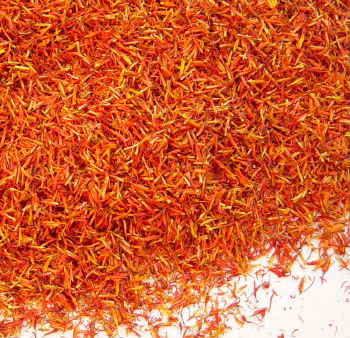
Safflower, safflower oil, Carthamus tinctorius

Safflower is an annual herb, native of Mediterranean countries and  known to humans at least  for 4000 years.
Originally it was grown mainly for it's flowers, a source of yellow and red (carthamin) dyes, though Ancient Chinese were using it's oil for a variety of things, like candle making, etc.
Because safflower has a similar color with saffron, it was  often used  to make fake saffron,  thus one of the safflower's nicknames is "Bastard's saffron". Other nicks are "Mexican saffron", "dyer's saffron" and "False saffron".
Now safflower is mostly grown for it's oil, though  there is still a demand  for it's flowers in many regions.
The oil in safflower contains almost 75%  linoleic acid, which is  higher than soybean, corn, cottonseed, peanut or olive oils. This type of safflower is used primarily for edible oil products such as salad oils and soft margarines. Scientists  disagree on whether oils high in polyunsaturated acids, like linoleic acid, can decrease blood cholesterol and the related heart and circulatory problems. Still, it is considered a "high quality" edible oil and public concern about this topic made safflower an important crop for vegetable oil.
Varieties that are high in oleic acid may serve as a heat-stable, but expensive cooking oil used to fry potato chips and french fries. As an industrial oil, it is considered a drying or semi drying oil that is used in manufacturing paints and other surface coatings. The oil is light in color and will not yellow with aging, hence it is used in white and light-colored paints. This oil may also be used as a diesel fuel substitute, but as other vegetable oils, is currently too cost-prohibitive for this use.
The meal that remains after oil extraction is used as a protein supplement for livestock. The meal usually contains  24% protein and a lot of  fiber. Decorticated meal (most of hulls removed) has about 40% protein with a reduced fiber content. Foots are used to manufacture soap. The birdseed industry buys a small portion of the seed production. Sheep and cattle can graze on safflower and stubble fields after the  harvest.
Production
In 2009,  646 427 tonnes of safflower seeds were produced by 23 countries. Over the last 50 years, world production of safflower seeds grew by about 100%.  Highest ever  crop of safflowers was in 1979, when 1 110 535 tons were produced. Lowest crop since 1961 was in 1961, when 326 997 tons were produced.
Land usage decreased by 1% since 1961. In 2009, crop of safflower used  752 455 hectares of land , which is about 0,048% of all arable land in the world.
Biggest producer in the world is India with 189 000 tons as of 2009.
Biggest producer per capita is Kazakhstan  with  4.36 kg of safflower seeds produced as of 2009.
As much as 95 grams of safflower seeds were produced per potential consumer of 2009. That is almost 500 calories.
World safflower seed crop could supply as much as  4.6 million people with 2000 calories a day,  and there is enough of protein for 5.7 million people.
Best  average worldwide yields were 961.8 kg per hectare in 1998, worst, since 1961-- 431.8  kg/ha ( 1961). Individual record belongs to USA  2447.2 kg per hectare in 1971.
Almost 19 000 tonnes were used as seed in 2009.
Average price for safflower seed is $550-700 per ton as of today.
Production of safflower seed by country:

item200720082009
Argentina
Safflower seed
58000 33480 86991
Australia
Safflower seed
2040 2104
6242
Canada
Safflower seed
2592
3366
3259Im
China
Safflower seed
32000 32500F 34000F
Ethiopia
Safflower seed
11176 8075 5552*
Hungary
Safflower seed
83 237 59
India
Safflower seed
240000 225000 189000
Iran (Islamic Republic of)
Safflower seed
658
593
599Im
Israel
Safflower seed
0F 0F 0F
Kazakhstan
Safflower seed
43940 45740 67000*
Kyrgyzstan
Safflower seed
12039 12830 14636
Mexico
Safflower seed
113334 96413 95000F
Morocco
Safflower seed


M
M
Occupied Palestinian Territory
Safflower seed
5 3 3F
Pakistan
Safflower seed
49 60 65
Portugal
Safflower seed

M
M
M
Russian Federation
Safflower seed
40 580 350
Spain
Safflower seed
24 30F 35F
Tajikistan
Safflower seed
1036 562 600F
Turkey
Safflower seed
2280 7068 20076
United Republic of Tanzania
Safflower seed
8846I9921Im10071Im
United States of America
Safflower seed
95547 140810 109756
Uzbekistan
Safflower seed
3500F 3621Im3133Im
World + (Total)
Safflower seed
627189A 622993A 646427A
My usual sources are fao.org,usda.gov, cia.gov, alibaba.com. Thank you for your visit!   

Here is the list of all articles at  Ironrye:

 http://ironrye.blogspot.com/2011/10/list-of-all-articles-at-iron-rye.html

Sunday, May 8, 2011

Pistachio, Pistacia vera

There are 11 species in the genus Pistacea but only one specie, Pistacea vera is grown commercially. It is a small (6-10 m ) tree , native of Iran  and nearby territories that likes dry or very dry  environment  and needs about 1000 hours of temperatures under 45 F. It takes awhile for it to grow, old cultivars were bringing first fruit only at 15th, 17th year, but new varieties  start bringing  fruit at 5th , 6th year and by 12th-13th year enter  full production mode,  and bring about 50 kg of pistachios every other year  at least till they are 200 years old or so. Allegedly, the oldest pistachio tree is a 700 years old tree that still lives in Iran .Pistachio trees require at least one male tree for 25 female trees for proper pollination , though with 1:10 ratio  the harvest is better.
Old remains testify that pistachios were known to men  at least since  7000 BC, and were cultured at least since 3500 BC.
Pistachios used to be royalty-only treat for awhile in the ancient past. The queen of Sheba, mentioned in both Bible and Quran,  half-mythical  half-real contemporary of the king Solomon , allegedly had forbidden consumption of pistachios  to anybody but herself and  whomever she wanted  to treat well.
 The ancient king of Babylon,  Nebuchadnezzar,  had pistachio trees planted in his famous hanging gardens. Moghul Emperor, Akbar the Great, hosted royal banquets befitting his royal status.  The chickens to be supplied for the banquet were  on  pistachio nuts diet  for 6 to 8 weeks before the banquet, to add a delicious flavor/under taste  to the chicken meat.
Emperor Vitellius was a big fan of pistachios, after being a governor in Syria he got so hooked  that he was eating pistachios with every meal. still it is a bit weird that Vitellius got credited with pistachio introduction to Rome considering that Syria was a part of Rome since 64 BC, long before his birth, and that Pistachio tree was cultivated by Greek  and Phoenician colonists  in Sicily possibly even before the founding of the Rome itself. Currently Sicily is still producing pistachios, which have a sharper taste possibly due to rich vulcanic soils, but production is negligent ( about 2 000 tonnes per year  for an entire Italy), mostly because  Italian government  supports financially olive production instead. Sicilian pistachios are used almost entirely  within Italy, mostly as a gourmet ice-cream / gelato  flavoring. 
Interestingly enough, despite of collapse of Roman Empire  and  difficulties for  international trade in Early Dark Ages, pistachios  did not disappear from  European markets.
According to Islamic legend , pistachio nuts were one of the first foods brought from heaven to the Earth by Adam. Pistachio was one of the two nuts mentioned in Bible  ( Genesis 43:11).
Pistachios, from Persian " pista"  are called the ''green almonds''  and are known as the ' 'smiling nut'' in Iran and the 'happy nut' in China.
HEALTH
Pistachios are extremely healthy nuts, it is proven that it optimizes your cholesterol levels, and in that particular study  people who consumed 3 ounces of nuts per day had better results than people who consumed  only 1.5 ounces daily.
There are strong suggestions that pistachios will lower your chance of getting lung cancer, as well as some other cancers, and that  consumption  of pistachios will lower your chances of getting diabetes.
However, just as pretty much all other nuts, pistachios are rich in alpha-linolenic acid, which , while lowes the risk of cardiovascular desease, has an unfortunate correlation with prostate cancer. There was a big study in 2006  in favor of this acid , and another in 2009 finding a bias  in  that big study.
I didnt look into these studies but my take on the issue is rather simple: one has to die  one way or another. Since  consumption of alpha-linoleic acid  is reducing  risk of cardiovascular desease, it accordingly increases your chances of dying from some other  calamity, which is,  in advanced age,  cancer. A 70 year old man who  has a healthy heart is far more likely to die of cancer than a 70-year old man with a sick heart. Which does not mean of course that a healthy heart in advanced age is something to sneeze at.
Pistachios are rich in vitamin E, lutein, beta carotene, . All three of these  vitamins are oil soluble. Pistachios are also great sources of  copper, manganese, and phosphorous along with heart healthy magnesium and potassium . Pistachios are the only nuts to contain  two carotenoids, lutein and zeaxanthin.
Arginine  from pistachios  will help people who suffer from anginas, or  who had a trauma.
Arginine is  important  in cell division, releasing hormones, removing ammonia ,  and helping maintain a functioning  immune system.
Production . In 2009,  572 946 tonnes of pistachios were produced, leaving an average consumer with  84.1 grams of  (in-shell) pistachios   in that year. That is about 44 grams of pistachio meats,  which is about 75-77 individual pistachios. Each pistachio has 3.1-3.3 calories, mostly in good monounsaturated fats.
Israel has the highest per-capita consumption in the world , about 1.3 pounds of pistachios per person. Interestingly that for a very long time Israel was breaking its own embargo on Iranian pistachios, by buying  Iranian pistachios from Turkish and Syrian middlemen.
USA banned import of Iranian pistachios in  1979,  allegedly in the course of a hostage crisis ( yeah, its surely got nothing to do with Californian orchards maturing  and producing  first commercial crop of pistachios in 1976). After the ban was lifted in early 1980s (1981 i think)commercial growers in USA complained  on affordability of Iranian pistachios and lobbied a 300% duty tax on all  Iranian pistachios, and  later  in 1987 all products from Iran were banned. Clinton lifted the ban on foods from Iran, (March of 2000)  but kept high duties, and Obama banned pistachios again in July 1 of 2010. US market of pistachios is around $700-800 million.
Iran is the biggest in the world producer of pistachios,  192 269 tons in 2008,  315 500 tons in 2007. However  USA soon will  surpass Iran in pistachio production as more and more orchards  are  beginning to mature, and the weather wasn't very good in Iran for the last 2 years or so.
In 2010,  USA produced  237 804 tonnes  of pistachios ( no data  for Iran yet ). A lot of American pistachios are exported to Asia-- China ( largest pistachio consumer in the world by volume, 120 million pounds per year, US sales went up from $5 to $50 million within 5 years, Arnold Shwarzenegger himself went to China, Japan and South Korea  to peddle  his Californian nuts there.)
Syria produced  more pistachios per capita than anyone else in 2009  ( 2.92 kg )

Worldwide, pistachio trees occupy  0.381% of all permanent crop land in the world. For Iran, the number is 19.2%.
There are enough calories in the world's crop of  pistachios to supply 2.37 million people ( combined populations of Namibia and Seychelles) with 2000 calories a day, and enough protein to supply over 3.5 million people with 50 grams per day.
Largest crop of pistachios ever was in 2007,  686 667 tons, lowest since 1961--- 19 440 tonnes in 1962.
Land usage from 1962 to 2009 increased   by 1750%.
Yields,  highest world's average was in 1997, 1405 kg per hectare, lowest since 1961-- 421.7 kg per hectare in 1979.
Best individual yield belongs to USA, 4182 kg per hectare in 2004. In fact USA production growing faster than the pistachio market itself. With salmonella scare from the last year,  leading producer invested $15 million into advocating  pistachios, they even have a commercial where former  governor Blagoevich is taking a bribe in pistachios.
Prices: 1 pound of salted and roasted nuts is selling for $7-8 per pound in retail. I was fortunate enough to buy  several  24-oz packages for $5.99 plus tax. ( today).  World's crop is about $4-5 billion worth.

My usual sources are fao.org, usda.gov,. cia.gov, alibaba.com. Thank you for your visit!

List of all articles at Ironrye:
 http://ironrye.blogspot.com/2011/10/list-of-all-articles-at-iron-rye.html


Production of pistachios by country       2007      2008      2009

Afganistan           pistachios                3600         2500         ?
Azerbaijan          pistachios                       3               3         2    
China                 pistachios               38000      40000      45000
Cote d'Ivoire      pistachios                    100          100          ?
Cyprus               pistachios                      25            24         40
Greece               pistachios               8148          8100       8100
Iran                    pistachios            315500      192269          ?
Italy                   pistachios                2782           2000          ?
Jordan               pistachios                     0                 0           ?
Kyrgyzstan        pistachios                  800               800         800
Madagascar      pistachios                  230              230           ?
Mauritius           pistachios                      5                   5          ?
Mexico             pistachios                      10                10         ?
Morocco          pistachios                      50                   50         ?
Pakistan           pistachios                     536                 773          ?
Syria                pistachios                 52066            52600       61484
Tunisia             pistachios                   2500              2500        ?
Turkey            pistachios                  73416          120113       81795 
USA               pistachios                188696          126100     175088
Uzbekistan      pistachios                      200                200              ?
WORLD         pistachios               686667           548377     572946


Φιστικιά ---- Greek

 Russian--Фисташка  

German--Pistazie

פיסטוק    Hebrew

Portuguese --Pistache

Bulgarian --- Шамфъстък

Turkish --- Antep fıstığı 

 Gujarati --    ޕިސްތާ ބަދަން


 arabic -- پسته

 farsi --  فستق

Friday, April 8, 2011

Millet, Mijo, Просо, Panicum, Panicoideae, Proso millet

Millets are a group of  annual grass species, 4 or 500 in total that live all over the world. About 10+ of them are used in agriculture since at least 8000 BC, most common is Pearl millet , others are Finger millet, Proso millet, Foxtail millet,  and exotics like  Kodo millet, Little millet, Guinea millet, Japanese barnyard millet, Indian barnyard millet. They grow very well on poorly fertilized, dry soils, and can tolerate pretty much anything except soil acidity.
Millet was a staple in Asia  well before  rice took over..Now its a sixth major grain and daily food for hundreds of millions of people. There are some serious studies suggesting that millet helps to prevent  type 2 diabetes and breast cancer. Personally, I did have my fair share of Proso Millet in my childhood  so I can tell you with all honesty that if I had to choose between  consuming it daily for the rest of my life and breast cancer,  the latter would be my choice of preference, even though I am a man.
In 2009,  32 034 572 tons of millet  were produced, leaving an average  potential consumer with a bit over  4.7 kg of millet (  10.43 pounds)  for the year of 2009. That's enough to last for 8.8 days. Worldwide, millet crop could feed 165.9 million people at 2000 calorie a day diet. There is enough protein in the world's millet crop  for over 193 million people. ( at 50 g a day).
Biggest crop ever was in 2008, 35 216 620 tons. Worst, since 1961--23.3 million tonnes in 1965.
Best worldwide yields were in 2008,     951.5 kg per hectare. Worst, since 1961--535.8 kg /ha in 1965.  Record yield belongs to Jordan, 8800 kg per hectare (1995) , area harvested was about  5 hectares-- an experimental field.
Worldwide , 35 454 429 hectares were used for Millet production,  that is over 2.25% of all  arable land in the world. Land usage decreased by about 20% in the last 50 years.
Biggest Millet producer  is  India with 8.59 million tons of millets produced, but there is a possibility that Nigeria  produced more than that in 2009. Biggest millet producer per capita is Mali with  95.8 kg produced in 2009. Africans in general eat about 20 kg of millet each, which is 4 times more than  the average consumption of  millet in Asia,  second  millet consuming region in the world.
Millet costs about $200-220 per ton, value of the world crop of millet  is about  $7 billion . Only 200-300 000 tonnes of millet , or around 1% of the production, are available for international trade, however this number does not include  trade within African continent.


List of all articles at Ironrye:
 http://ironrye.blogspot.com/2011/10/list-of-all-articles-at-iron-rye.html

Production of millet   by country     

item200720082009
Afghanistan
Millet
12000
22000

Angola
Millet
79345 12757 40348
Argentina
Millet
14484 14824 5880
Australia
Millet
36000* 37000*

Austria
Millet
8800F 9000F 8500F
Azerbaijan
Millet
103 48 8
Bahamas
Millet

M
M
M
Bangladesh
Millet
13795 6514
M
Benin
Millet
35303 33984
M
Bhutan
Millet
8779 8779F
M
Botswana
Millet
125F 125F
M
Bulgaria
Millet
2508 4822 4262
Burkina Faso
Millet
966016 1255189
M
Burundi
Millet
11500F 11500F
M
Cameroon
Millet
60000F 60000F 60000F
Central African Republic
Millet
10000* 10000* 10000*
Chad
Millet
495486 523162
M
China
Millet
1508000 1551000F 1501000F
Congo
Millet
8500F 9500F
M
Côte d'Ivoire
Millet
57000 49000
M
Croatia
Millet
410* 260* 380*
Czech Republic
Millet
1800F 1800F
M
Democratic People's Republic of Korea
Millet
61000* 61000F
M
Democratic Republic of the Congo
Millet
37530 37810
M
Eritrea
Millet
63254 63254F
M
Ethiopia
Millet
397002 484409 560305*
France
Millet
38000F 38000F 40000F
Gambia
Millet
89186 125624 144868
Ghana
Millet
113040 193840 245550
Greece
Millet
0F 0F
M
Guinea
Millet
323000F 323000F
M
Guinea-Bissau
Millet
26169 31388
M
Hungary
Millet
7644 9925 6863
India
Millet
12673000 11340000 8590000
Iran (Islamic Republic of)
Millet
9000F 9000F
M
Iraq
Millet
6471 4470 1954
Japan
Millet
305F 305F
M
Jordan
Millet
7 7F
M
Kazakhstan
Millet
31000 27380 31000
Kenya
Millet
119599 38462 54000
Kyrgyzstan
Millet
180 121 174
Libyan Arab Jamahiriya
Millet
6400F 6400F
M
Malawi
Millet
32251 31869
M
Maldives
Millet
210F 210F
M
Mali
Millet
1175107 1413908 1390410
Mauritania
Millet
1601 2318 4974*
Mexico
Millet
1800 1800F
M
Morocco
Millet
7000F 7000F
M
Mozambique
Millet
25213 23967
M
Myanmar
Millet
166000* 166000F
M
Namibia
Millet
60000F 60000F
M
Nepal
Millet
284813 291098 292683
Niger
Millet
2781928 3489400
M
Nigeria
Millet
8090000 9064000
M
Pakistan
Millet
305000 296400 293000
Poland
Millet
11692 9490 12142
Portugal
Millet

M
M
M
Republic of Korea
Millet
1356 1249
M
Republic of Moldova
Millet
50 512 400*
Romania
Millet
2327 2853 2206
Russian Federation
Millet
417371 711010 264700
Rwanda
Millet
4000F 4000F
M
Saudi Arabia
Millet
6073 6073F
M
Senegal
Millet
318822 678171 810121
Serbia
Millet
200F 200F 200F
Sierra Leone
Millet
25000F 25000F
M
Slovakia
Millet
1324 1927 1928
Slovenia
Millet
543 315 159
South Africa
Millet
12000F 12000F
M
Spain
Millet
517 517F
M
Sri Lanka
Millet
5500 6540 6450
Sudan
Millet
796000 721000 630000
Syrian Arab Republic
Millet
4100 1500
M
Tajikistan
Millet
14 37 40F
The former Yugoslav Republic of Macedonia
Millet

M 30* 30F
Togo
Millet
45456 46440*
M
Turkey
Millet
7094 6995 7171
Uganda
Millet
732000 783000 841000
Ukraine
Millet
84300 220700 139300
United Republic of Tanzania
Millet
219000F 219000F
M
United States of America
Millet
380047 334621 223730
Uzbekistan
Millet
6200* 7000* 9000*
Viet Nam
Millet
1600F 1600F
M
Yemen
Millet
88035 74048 61527
Zambia
Millet
21707 39163 48967*
Zimbabwe
Millet
43800 37000
M
World + (Total)
Millet
33498792A 35215620A 32034572

My main sources are fao.org, alibaba.com, usda.gov, cia.gov. Thank you for your visit!